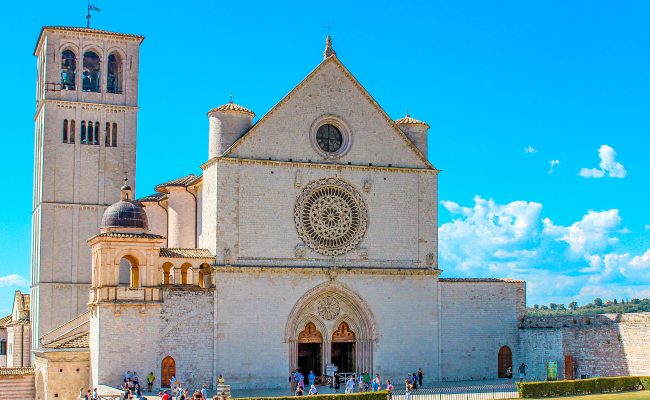
The 7 Churches of Revelation: What You Need to Know Before You Go
In the Book of Revelation, Jesus dictated seven letters to seven real churches in what is now western Turkey. He praised some. He criticized others. He warned all of them.
Those churches are still there. The ruins are accessible. You can visit them in one trip. And when you stand in them and read the letter addressed to the people who once gathered in that exact place, something shifts.
Here’s what you need to know before booking a 7 Churches of Revelation tour in Turkey.
Why Jesus wrote to these seven specific churches
The seven churches of Revelation — Ephesus, Smyrna, Pergamon, Thyatira, Sardis, Philadelphia, and Laodicea — were real Christian communities in Asia Minor (modern-day Turkey) around 95 AD. John, exiled on the island of Patmos, received the vision of Revelation and was instructed to write to these churches specifically.
They were not the only Christian communities in the region. They were chosen because they represented the full spectrum of the church’s condition: those who had lost their first love (Ephesus), those suffering persecution (Smyrna), those compromising with the culture (Pergamon and Thyatira), those who were spiritually dead despite appearing alive (Sardis), those with little strength who had kept the faith (Philadelphia), and those who were lukewarm — neither hot nor cold (Laodicea).
Reading your own church in these seven letters is one of the most unsettling and clarifying things a Christian can do.
What each church was praised and criticized for — and why it still applies today
Ephesus: Praised for endurance and discernment. Criticized for losing their first love (Rev 2:4). The church that does everything right but has lost the warmth that drove it.
Smyrna: No criticism. Only encouragement for a persecuted community facing poverty and opposition. “Be faithful unto death, and I will give you the crown of life” (Rev 2:10).
Pergamon: Praised for holding fast in the city “where Satan’s throne is”. Criticized for tolerating false teaching and moral compromise. The church in a hostile culture that has let some of the culture in.
Thyatira: Praised for love and service. Criticized for tolerating a false prophet and sexual immorality. Growth in the right directions alongside tolerance of what should not be tolerated.
Sardis: Has a reputation for being alive but is dead (Rev 3:1). The church that looks fine from the outside.
Philadelphia: No criticism. Praised for keeping the word despite little strength. The letter most Christians find most personally encouraging.
Laodicea: The most famous — and possibly the most convicting. “Because you are lukewarm, and neither hot nor cold, I will spit you out of my mouth” (Rev 3:16). The church of comfort, self-sufficiency, and spiritual mediocrity.
Standing in each of these places while the guide reads the letter addressed to the people who worshipped there — the experience is hard to describe and impossible to forget.
What you will actually see at each site on a 7 Churches of Revelation tour
The sites vary significantly in what survives. Honest expectations matter.
Ephesus is the most spectacular — a full ancient city with marble streets, the Library of Celsus, a theater that seated 25,000, and the site of the Temple of Artemis (one of the Seven Wonders of the Ancient World). You can walk the same streets Paul walked in Acts 19. This is the site that most travelers describe as the day they’ll remember forever.
Smyrna (modern Izmir) is a living city. The ancient church site is modest — you visit the Agora of Smyrna and the area around it. The church of the martyred Polycarp is nearby.
Pergamon is dramatic — a steep acropolis above the modern city, with the ruins of the Temple of Zeus (the likely reference to “Satan’s throne”), the Great Library, and the Asclepion medical center. One of the most visually impressive sites on the tour.
Thyatira, Sardis, and Philadelphia have less visible remains. A good guide fills in what archaeology hasn’t preserved with historical context and the text of the letters themselves.
Laodicea is actively being excavated and has become more impressive in recent years. The water system that produced the lukewarm water referenced in Revelation 3 is visible. The nearby white thermal terraces of Pamukkale (ancient Hierapolis) are one of the most photographed natural sites in Turkey.
Why Cappadocia is included in most 7 Churches of Revelation tours
Geographically, Cappadocia is in central Turkey — not in the Aegean region where the seven churches are located. So why does almost every 7 Churches tour include it?
Two reasons. First, Cappadocia has an extraordinary early Christian history. The underground cities (Derinkuyu, Kaymaklı) were carved by early Christians fleeing Roman persecution — complete with churches, schools, and living quarters cut into volcanic rock. The Göreme Open Air Museum contains medieval rock-cut churches with original frescoes from the 10th–13th centuries.
Second, Cappadocia is one of the most visually spectacular landscapes on earth — fairy chimneys, rose valleys, hot air balloons at sunrise. It is the image most people have of Turkey before they know anything else about it.
For a Christian traveler, it combines ancient faith history with wonder. Getting from the Aegean coast to Cappadocia requires a domestic flight — which is why the inclusion of 2 domestic flights in a tour itinerary matters significantly.
How to read Revelation 2–3 before you go
The best preparation for a 7 Churches of Revelation tour in Turkey is straightforward: read Revelation chapters 1–3 slowly, in the weeks before you depart. Read each letter as if it were addressed to your church. Then read it again when you’re standing in the ruins of that church.
The gap between reading and being there is something the trip closes — and does not reopen when you come home.
👉 Our 7 Churches of Revelation tour visits all 7 in 7 days — with 2 domestic flights included — from just 2 people. → View the Turkey tour page
Someone has said that for many Christians, church history began with the first Billy Graham crusade. They think that as long as they derive their beliefs from the Bible, they can ignore the two thousand years of history between the apostles and the present. A Reformation tour is what happens when Christians decide to learn […]
Most Christians think of Egypt primarily as a backdrop to Moses and the Exodus. The real biblical significance of Egypt is far richer — and more personal — than that. Egypt appears throughout both testaments: Abraham sought refuge there. Joseph saved a nation from famine there. Moses was born, hidden, and called by God there. […]